Your mother may have been right when she told you to sit up straight.
Good posture does more than make you look taller or more confident. In fact, it affects your spine, joints, muscles, and overall movement. When your posture remains poor for long periods, it can also contribute to neck pain, back pain, headaches, muscle tension, and reduced mobility.
For that reason, posture is an important part of the evaluation at Chandler Chiropractic. By examining your posture, we can learn more about how your body moves and functions.
What Does Good Posture Look Like?
Good posture does not mean standing stiffly with your shoulders pulled back all day. Instead, it means keeping your body balanced while reducing unnecessary stress on your muscles and joints.
For example, when you stand, your ears should remain over your shoulders. Your shoulders should align with your hips, while your hips should align with your knees and ankles. At the same time, try to keep your weight balanced between both feet.
When one area shifts out of alignment, however, other areas often compensate. As a result, your body may place extra stress on certain muscles and joints.
For instance, a forward head position forces your neck and upper-back muscles to work harder to support your head. Over time, this added strain can contribute to muscle tightness, restricted joints, headaches, and recurring neck or back pain.
Your Sitting Position Matters
Although posture problems can develop while standing, many people first notice them at a desk.
When you work at a computer, your head may gradually move forward while your shoulders round. In addition, sitting for long periods can tighten your hips and place extra strain on your lower back.
Because of these effects, proper ergonomics can make an important difference.
Start by placing your monitor near eye level and keeping your keyboard at a comfortable height. Also, choose a chair that supports your lower back.
Most importantly, change positions throughout the day. Even good posture can create stress when you hold the same position for hours without moving. Therefore, stand up, walk around, and reset your position regularly.
How Phones Affect Your Posture
In addition to desk work, technology has created another common posture problem: tech neck.
When you look down at your phone, your neck muscles must work harder to support your head. If you remain in that position for long periods, the added stress can affect your neck, shoulders, and upper back.
This problem does not affect adults alone. Children, teenagers, and young adults may also spend hours using phones, tablets, computers, and gaming devices. Consequently, they can develop the same forward-head and rounded-shoulder posture patterns.
To reduce this stress, hold your phone closer to eye level whenever possible. Also, take regular breaks and change positions often. Although these habits may seem simple, they can help protect your neck and upper back over time.
Poor Posture May Contribute to Headaches
Posture affects more than your neck and back. It can also influence the muscles and joints involved in certain types of headaches.
For example, forward head posture and prolonged computer use can increase tension in your neck, shoulders, and upper trapezius muscles. In some people, that tension may contribute to recurring headaches.
That is one reason we evaluate posture when patients ask, “Why do I keep getting headaches?”
Although the headache may be the symptom you notice, your neck and the surrounding joints and muscles may contribute to the problem. Therefore, identifying those contributing factors can be an important part of finding a long-term solution.
Posture Influences Movement
Your body works as a connected system, so a change in one area can affect another.
For example, poor head position can alter movement in your neck and shoulders. Similarly, rounded shoulders can limit upper-back motion. Problems involving the pelvis or lower back may also affect your hips, knees, and walking pattern.
These changes can become especially important for athletes. Efficient movement requires mobility and proper joint function throughout the body. As a result, addressing posture and movement restrictions may support sports chiropractic care, injury recovery, and athletic performance.
How Chiropractic Care Can Help
Simply reminding yourself to “sit up straight” may not solve the problem. If restricted joints, tight muscles, or long-standing movement patterns affect your posture, maintaining better alignment may be difficult.
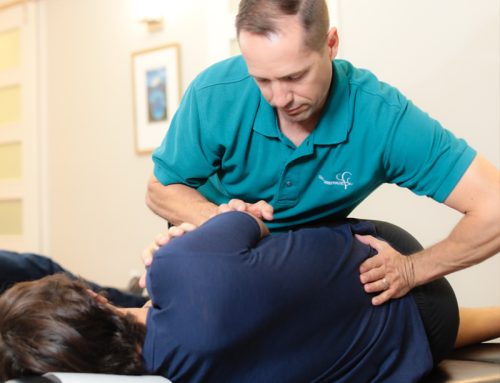
For that reason, a thorough chiropractic examination can help identify the factors affecting your posture. At Chandler Chiropractic and Chandler Chiropractic of Scottsdale, we evaluate your posture, spinal movement, range of motion, muscle strength, joint function, and neurological and orthopedic findings.
When appropriate, we also use digital X-rays to examine spinal alignment, degeneration, structural changes, and previous injuries. These findings help us better understand how your spine and surrounding structures may affect your movement.
Depending on your needs, your care may include chiropractic adjustments, physical therapy, corrective exercises, massage therapy, stretching, or ergonomic changes. Together, these approaches can improve joint movement while addressing the muscle and movement patterns that affect your posture.
The goal goes beyond standing straighter.
We want your body to move and function better.
Simple Posture Changes Can Help
You can begin improving your posture by paying attention to it throughout the day. For example, raise your phone instead of repeatedly dropping your head. Adjust your computer monitor so you do not have to lean forward. In addition, stand up regularly, stretch, walk, and keep your body moving.
However, do not ignore recurring neck pain, back pain, headaches, or stiffness. Although these symptoms may seem related to desk work or aging, they may also indicate that your body is struggling with movement or alignment.
In other words, your posture may reveal how your body functions.
At Chandler Chiropractic, we look for the reasons your problem keeps returning. Then, based on our findings, we create a plan to address those contributing factors instead of simply chasing symptoms.
Better posture. Better movement. Better function.
Lasting results for all stages of life.