Quick Answer
Yes, chiropractic care can help with headaches and migraines—particularly headaches associated with the neck, sometimes called cervicogenic headaches.
But not every headache has the same cause, and chiropractic care isn’t appropriate for every person experiencing headaches or migraines.
That’s why at Chandler Chiropractic, we don’t begin with an adjustment.
We begin with a conversation, followed by a thorough examination to better understand why your headaches may be happening and whether chiropractic care is an appropriate option for you.
 Why Do Headaches Keep Coming Back?
After more than 22 years of caring for patients with headaches, I’ve learned that most people don’t come into our office because of one headache.
They come because they’re tired of living their lives around headaches.
They’re tired of wondering when the next one will happen.
They’re tired of carrying pain medication everywhere.
They’re tired of missing work, family activities, vacations, exercise, golf, or simply an evening at home because they don’t feel well.
And many eventually start wondering:
“Is this just something I have to live with?”
I don’t think that’s the best question.
I think the better question is:
Why is this happening?
Because headaches are a symptom—not a diagnosis by themselves—and different types of headaches can have very different causes.
Can Your Neck Contribute to Headaches?
It can.
One type of headache we commonly evaluate is called a cervicogenic headache.
A cervicogenic headache originates from structures in the cervical spine—the neck—but the pain is perceived in the head.
That’s an important distinction.
Where you feel pain isn’t necessarily where the problem began.
This is one reason we evaluate more than simply the location of your headache.
We look at factors such as:
- Neck movement and range of motion
- Posture
- Muscle function
- Spinal and joint mobility
- Previous injuries
- Neurological findings
- Work and daily activities
- Sleep
- Physical stress
- Other symptoms that may accompany your headaches
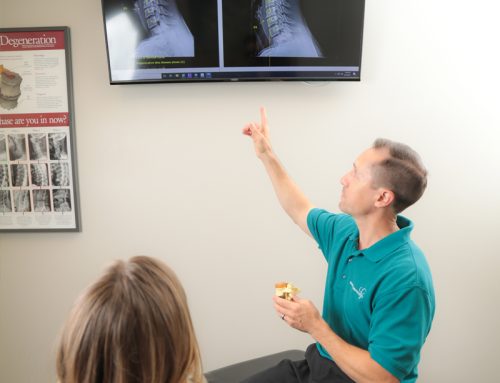
When clinically appropriate, digital X-rays may also provide additional information about the structure of the spine, its natural curves, degeneration, or evidence of previous injury.
Each finding is another piece of the puzzle.
What About Migraines?
Migraines are different from cervicogenic headaches, and this is an area where it’s especially important not to overstate what chiropractic care can accomplish.
Some patients experiencing migraines choose chiropractic care, particularly when neck pain, restricted movement, muscle tension, or other musculoskeletal factors are also present.
However, the scientific evidence for spinal manipulation specifically for migraine remains uncertain.
A recent systematic review and meta-analysis examining six randomized clinical trials involving 645 people with migraine found very low- to low-certainty evidence and concluded that the effectiveness of spinal manipulation for migraine remains unproven.
That doesn’t mean someone experiencing migraines can’t be evaluated by a chiropractor.
It means we shouldn’t assume chiropractic care is the answer simply because someone has migraines.
The examination matters.
What Does Research Say About Chiropractic and Headaches?
The evidence isn’t the same for every headache type.
Research is more supportive for cervicogenic headaches than it is for migraine.
A 2020 systematic review and meta-analysis found that spinal manipulative therapy provided small short-term improvements in pain intensity, headache frequency, and disability among people with cervicogenic headaches compared with other manual therapies. The researchers also noted that high-quality evidence in this area remains limited.
More recent research continues to examine manipulation, mobilization, exercise, and other conservative approaches for cervicogenic headaches.
The important takeaway isn’t that every headache should receive chiropractic care.
It’s that certain headaches—particularly those involving the cervical spine—may respond to conservative approaches, and determining the type of headache matters.
 How Do We Determine Whether Chiropractic Care Is Appropriate?
We start by listening.
Every headache has a story.
We may ask:
When did your headaches begin?
How often do they occur?
Where do you feel the pain?
How long do they last?
What makes them better or worse?
Have you had previous car accidents, sports injuries, falls, or other injuries?
Do you spend long hours working at a computer?
How do you sleep?
Have you noticed dizziness, jaw discomfort, shoulder tightness, numbness, tingling, vision changes, or other symptoms?
Those questions aren’t random.
They help us understand the person experiencing the headache—not simply the headache itself.
After the consultation, we perform an examination based on your individual history and symptoms.
Only after gathering that information can we make an informed recommendation about the most appropriate next step.
Sometimes Chiropractic Is the Answer. Sometimes It Isn’t.
This may be one of the most important things I can tell someone considering chiropractic care for headaches.
Chiropractic isn’t the answer for every headache.
And we’re completely comfortable saying that.
Our responsibility isn’t to convince every person with headaches that they need chiropractic care.
Our responsibility is to listen, examine, explain our findings, and help determine the most appropriate path forward.
Sometimes that’s chiropractic care.
Sometimes we need additional information first.
Sometimes another healthcare provider should be involved.
And sometimes the best recommendation is to begin somewhere other than our office.
Good healthcare isn’t about making every problem fit what you do.
It’s about helping the patient get to the right place.
When Should a Headache Be Evaluated Immediately?
Certain headache symptoms require immediate medical attention rather than beginning in a chiropractic office.
Seek emergency medical care for symptoms such as:
- A sudden, extremely severe headache unlike anything you’ve experienced before
- Sudden vision loss or significant vision changes
- Difficulty speaking or understanding speech
- Sudden weakness or numbness, particularly on one side of the body
- Confusion or changes in mental status
- Loss of consciousness or feeling as though you may pass out
- Severe headache accompanied by high fever, stiff neck, or persistent vomiting
- Other symptoms suggesting a medical emergency
If something about your headache feels dramatically different or concerning, getting the appropriate medical evaluation comes first.
 So, Can a Chiropractor Help With Your Headaches?
Yes.
But I wouldn’t want to fully answer that question without knowing your story.
Your headaches may be influenced by your neck.
They may involve previous injuries, posture, muscle tension, movement restrictions, or other physical factors.
They may have another cause entirely.
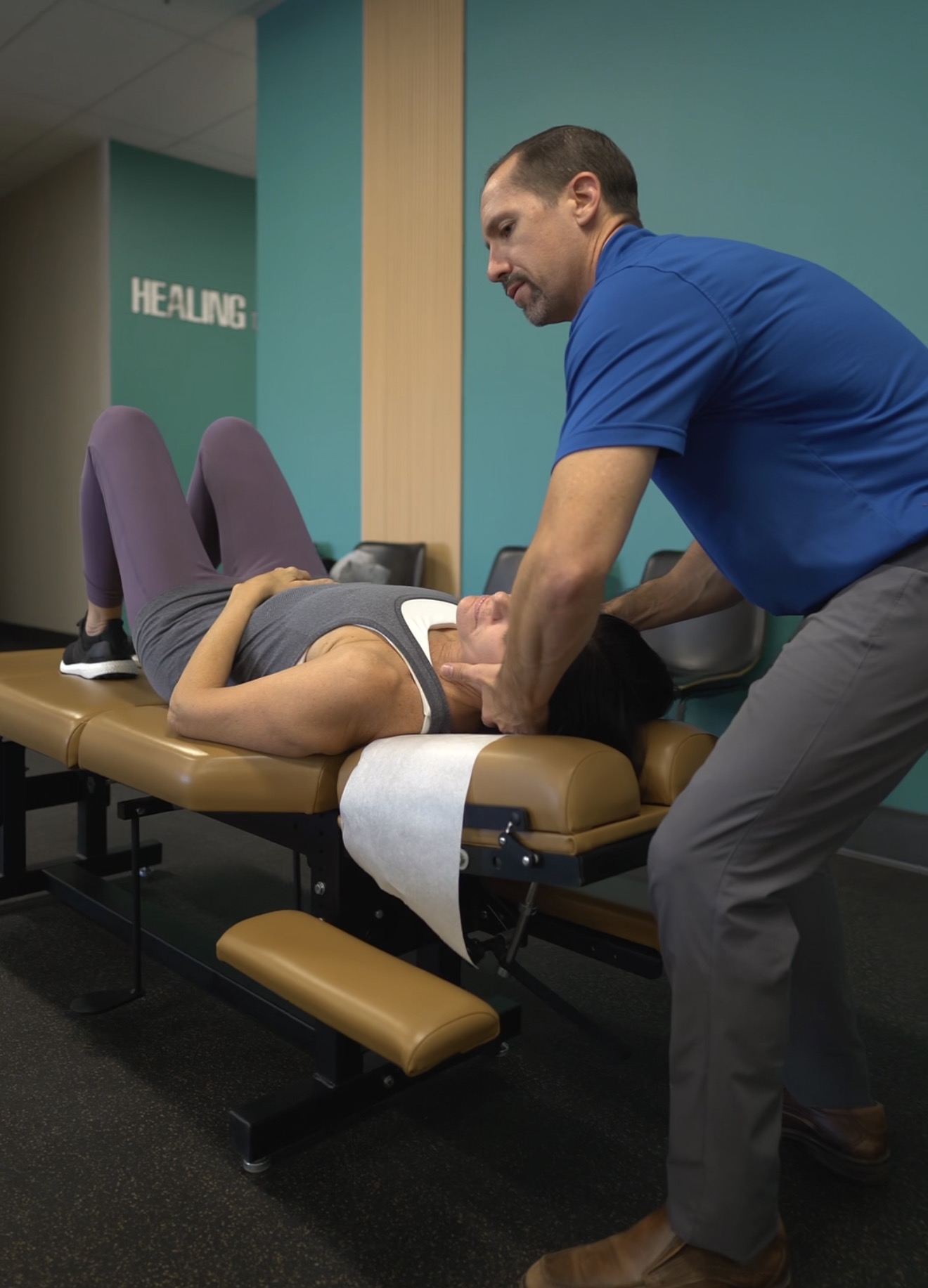
That’s why our goal at Chandler Chiropractic isn’t simply to provide an adjustment.
Our goal is to understand why you’re experiencing headaches and determine whether chiropractic care is an appropriate option for you.
After more than 22 years in practice, I’ve learned that people aren’t simply looking for someone to “crack” their neck.
They’re looking for answers.
And that’s where we believe good healthcare should begin.
Not with an adjustment.
With a conversation.
Research Referenced
Fernandez M, et al. Spinal manipulation for the management of cervicogenic headache: A systematic review and meta-analysis. European Journal of Pain. 2020.
Posadzki P, et al. Spinal manipulations for migraine: an updated systematic review and meta-analysis of randomized clinical trials. 2024.
Additional research continues to evaluate manual therapy and other conservative approaches for cervicogenic headache.
This information is educational and is not intended to diagnose an individual condition. Headaches can have many causes. Appropriate evaluation is important, particularly when symptoms are new, severe, changing, or accompanied by neurological or other concerning symptoms.